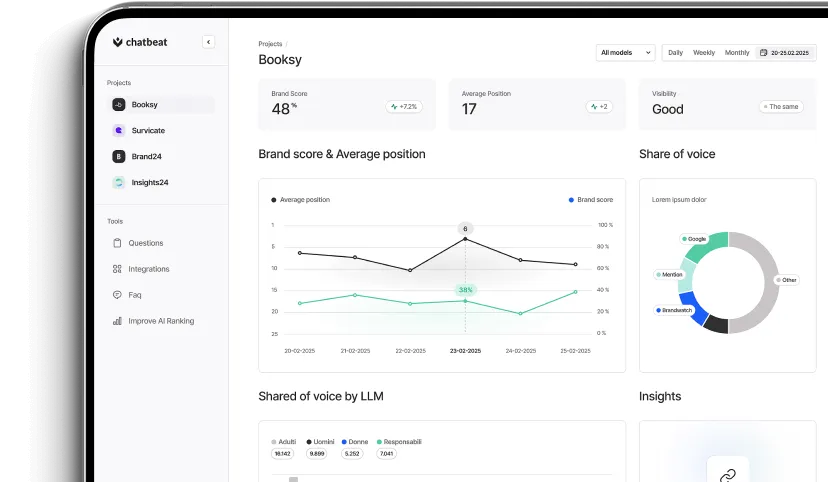
Results at a glance
- +10+ percentage points AI Share of Voice (≈18–19% → ≈29%) in gas & condensing boilers (July → November 2025)
- Median position improved from #2 → #1
- Brand Score +6pp
- Biggest changes by project and model: Perplexity median position jumped 3.8 → 1.3; GPT Brand Score rose 7.65% → 57%; Gemini median position improved 5 → 3.2.
About Viessmann Climate Solutions
Viessmann Climate Solutions is a global brand behind heating and climate technologies that help homes and businesses stay comfortable while using energy more efficiently. From heat pumps to integrated climate systems, their focus is on reliable solutions that support the shift toward more sustainable buildings.
Featured in this case study:
- Ewelina Bartnikowska — Marketing Manager / Head of Marketing at Viessmann Climate Solutions PL. She leads the marketing team in Poland, connects the dots between strategy and day-to-day execution, and works closely with Sales, HQ, and partners to hit shared goals.
- Marek Mrozicki — Digital Marketing Manager, working with Viessmann Climate Solutions PL. He’s focused on digital growth – connecting performance marketing, lead management, automation, and measurement to turn AI-visibility insights into execution and pipeline impact.
Challenge
AI models like ChatGPT, Claude, Gemini, or Perplexity are starting to replace classic search results pages. Yet:
- over 25% of brands analysed in Smerush weren’t present at all in AI Overviews,
- by 2025, almost 1 billion people worldwide will be using AI chatbots to ask product questions. [source]
Viessmann was early to spot the risk and the opportunity. While most of the market was just hearing first rumours about Google’s AI Overviews, they were already using a beta version of Chatbeat to see:
- what potential customers ask AI about heating, heat pumps, and biomass,
- which articles, blogs, and forums AI models quote most often,
- how often Viessmann appears vs. competitors when users ask for recommendations,
- where strong offline brands are surprisingly weak in AI answers.
Solution
Viessmann combined a classic SEO & GEO audit with Chatbeat’s AI Visibility Audit.
- SEO showed what people search for and where there are keyword gaps.
- Chatbeat showed what AI actually answers, which brands it recommends and which sources it cites.
Together, this created a double validation loop:
- SEO (people) + AI visibility (models) → topics worth investing in.
- If a topic had search demand and strong AI prompt volume, it went to the top of the roadmap.
- If AI rarely mentioned Viessmann in an area where the brand is strong, it became a priority gap.
"We stopped looking only at keyword volumes. We now also prioritise the number of prompts in a topic, our share of voice in AI and the quality of sources models are citing."
.webp)
What Chatbeat gives Viessmann in practice
1. A live picture of how AI “sees” the brand
With Chatbeat, the Viessmann team tracks:
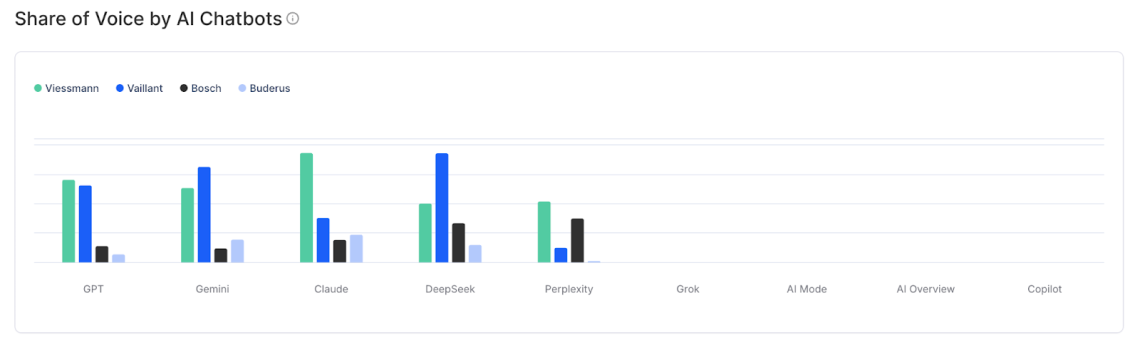
- Brand ranking & share of voice in AI chatbots
- Median position of the brand across GPT, Gemini, Claude, DeepSeek, Perplexity, Grok, AI Overviews and Copilot.
- How often Viessmann is recommended vs. competitors.
- Key prompts in their category
- Real user questions like “Which gas boiler do you recommend?” or “Best condensing boiler for a house?”.
- Search volume for each prompt + average position of Viessmann across models.
- Sources AI models rely on
- Top domains and URLs quoted by AI when answering heating-related prompts.
- AI citation volume per source and per model.
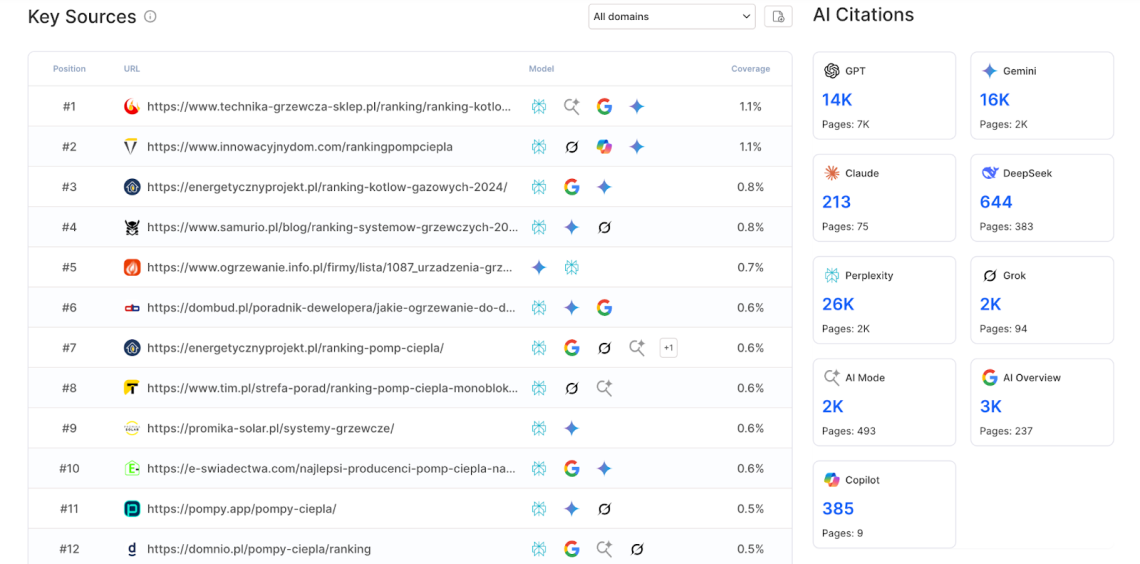
"We discovered non-obvious, 'hidden' sources – websites that AI models frequently cited but which were not on our HVAC/renewables radar at all."
.webp)
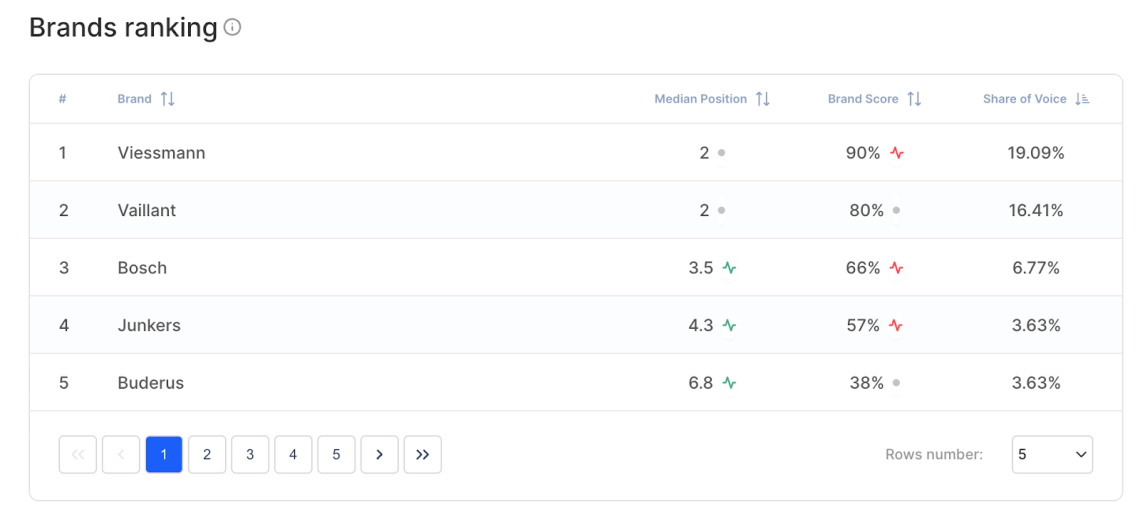
2. Automatic, real AI competitors
Chatbeat identifies brands that actually compete for attention in AI answers.
- The team no longer has to define competitors manually.
- They can see which brands AI treats as alternatives for a given product type.
- Insight: AI competitors are not always the same as “market competitors” known from offline sales.
3. Content and channel strategy, driven by AI data
Based on Chatbeat insight, Viessmann:
- creates and updates content around prompts AI actually receives, not just keyword lists,
- reallocates budget from traditional media towards online and AI-relevant content,
- manages reviews and mentions more actively, knowing they can influence AI answers.
"Chatbeat lets us remodel key content into a more AI‑friendly structure and build it around the most common prompts, instead of our old pattern of product → service → case study → CSR."
Examples of “AI‑first” articles include product comparison and explainer pieces on the Viessmann blog, written explicitly to match typical AI prompts and recommended structures.
Strategy
Viessmann translated Chatbeat insight into clear operational changes:
- Content planning & optimisation
- New articles created directly from Chatbeat prompt lists (e.g. on heat pumps, gas boilers, biomass).
- Existing content reworked to match “AI-friendly” structures: clear question headings, concise answers, comparison tables, FAQs.
- More effort invested into topics where Viessmann can become the “default source” in AI answers.
- SEO + AI prioritisation
- Topics no longer prioritised only by keyword volume and difficulty, but also by:
- number of prompts in Chatbeat,
- current AI share of voice,
- quality and type of sources models quote.
- Decision rule: deepen strong topics rather than chase a long tail of new, weaker ones.
- Topics no longer prioritised only by keyword volume and difficulty, but also by:
- Publisher & PR strategy
- Practical list of domains where Viessmann should appear (articles, rankings, expert comments).
- Focus on websites that are “over‑indexed” in AI citations for their category.
"The biggest quick win was an immediate map of where we already win in AI – topics with high share of voice – and where AI doesn't see us or has no clear champion, so we can step in as a leader."
Results
Within a few months of acting on Chatbeat recommendations, Viessmann saw clear, data-backed progress.
1. From sometimes mentioned to regularly recommended
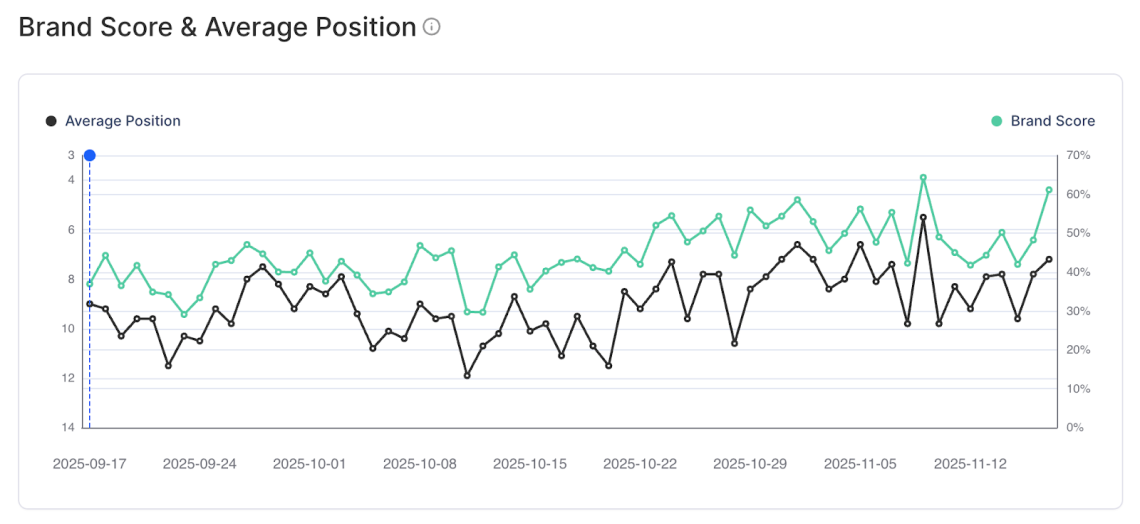
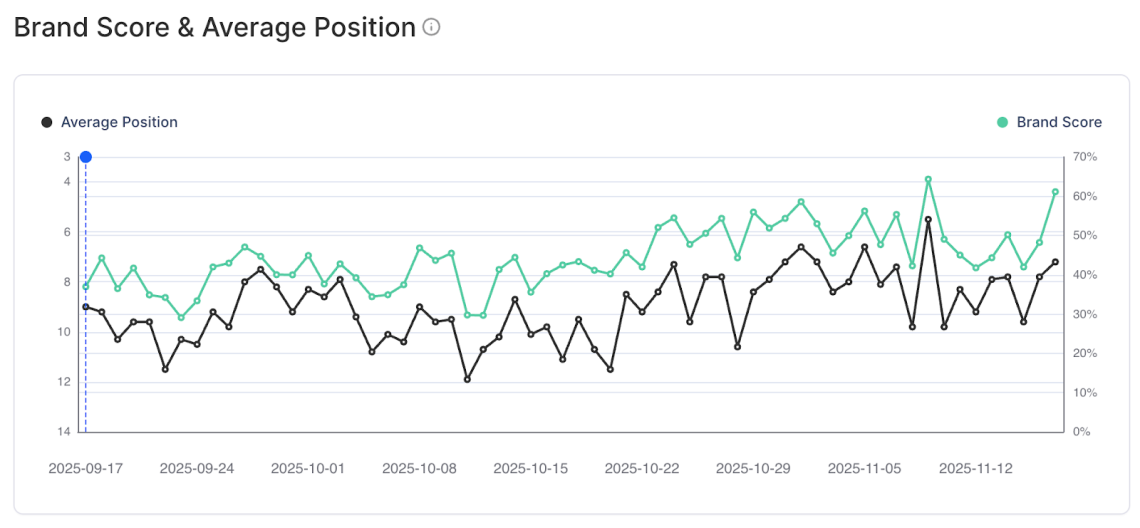
In prompts related to pellet boilers:
- initial average AI position: around 9–11, Brand Score 35–45%,
- after ongoing optimisation:
- average position improved to around 8–9,
- Brand Score climbed to 60–65%.
2. From tied at the top to clear #1
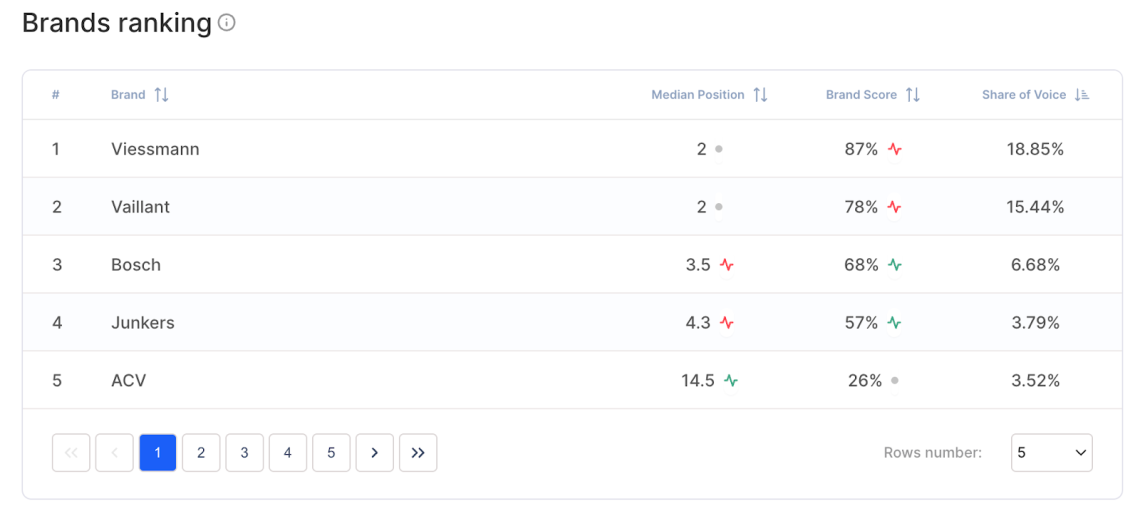
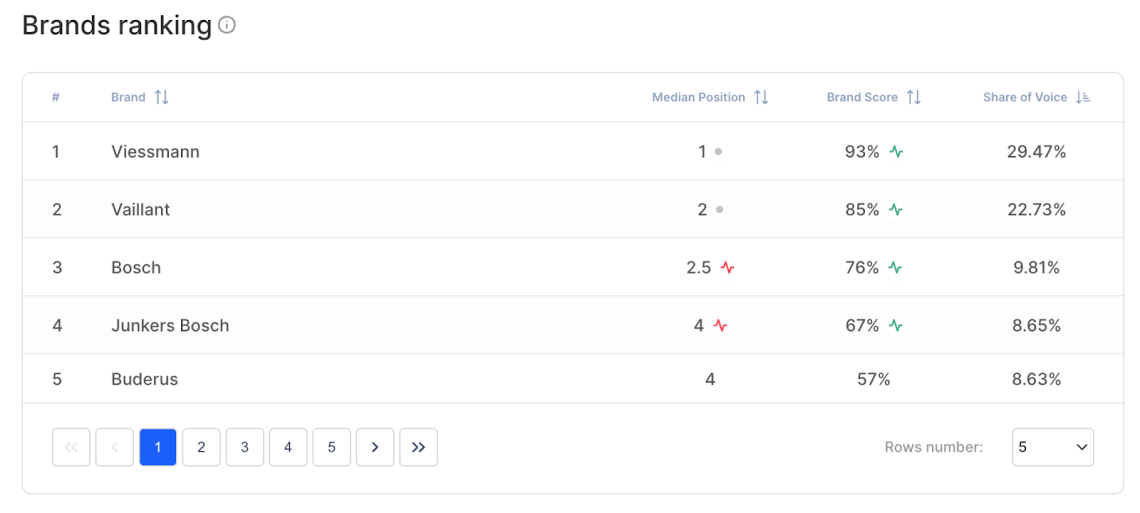
For gas and condensing boilers, Viessmann launched an AI visibility project on 19.07.2025 with:
- median position: 2,
- clear but not dominant share of voice.
Four months later, on 19.11.2025:
- median position improved to 1,
- Brand Score increased by 6 percentage points,
- Share of Voice grew by more than 10 percentage points, placing Viessmann clearly ahead of key competitors.
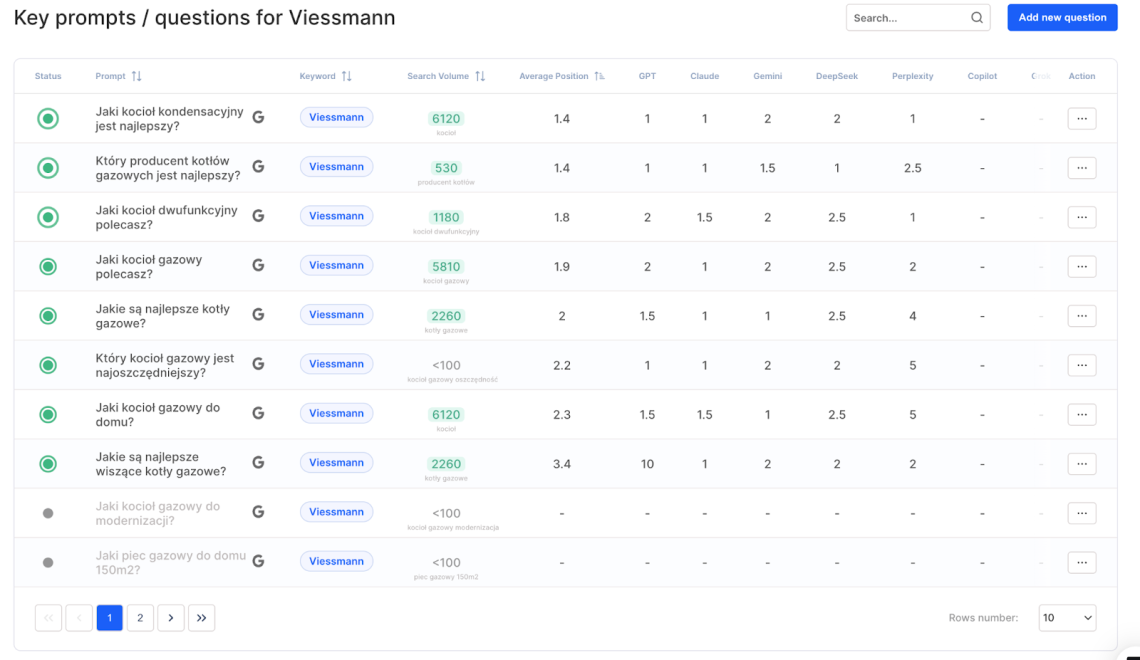
3. Top prompts: higher ranks, more consistency across models
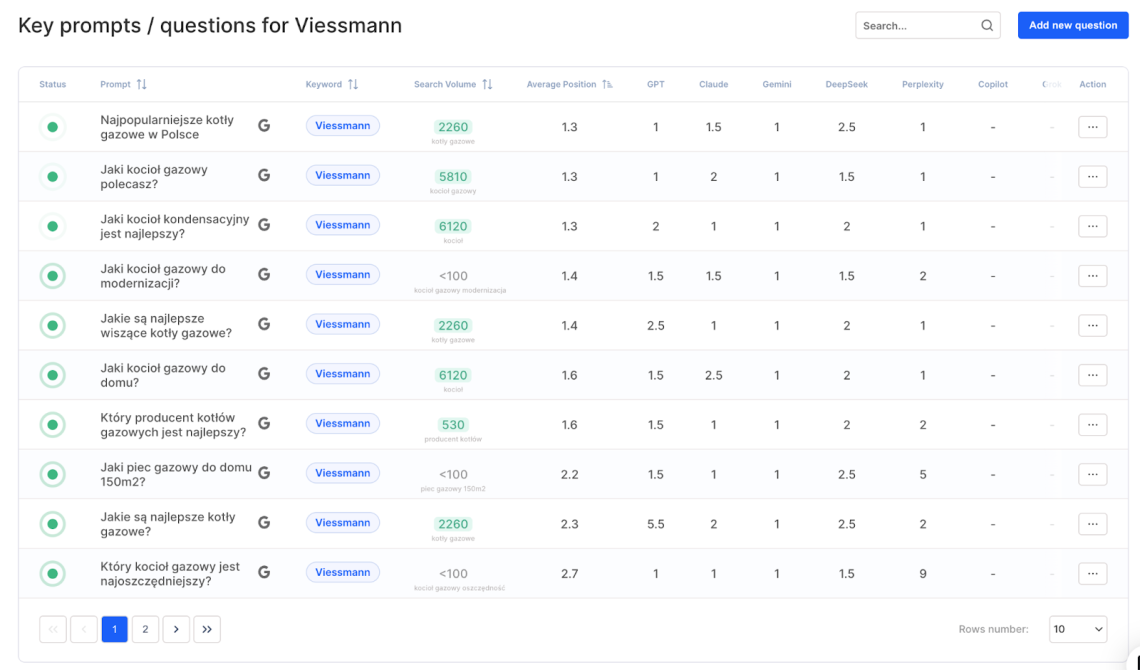
Comparing July vs November data for the same key prompts, Viessmann’s average positions improved across high‑volume, high‑intent questions such as:
- “Which gas boiler do you recommend?” → from 1.9 to 1.3
- “Which condensing boiler is best?” → from 1.4 to 1.3
- “Which gas boiler for a house?” → from 2.3 to 1.6
- “What are the best wall‑hung gas boilers?” → from 3.4 to 1.4
At the same time, results across different LLMs (GPT, Claude, Gemini, DeepSeek) became more consistent:
"We now see much less divergence between models – rankings are more aligned and often close to '1'. Viessmann is recognised as a recommended brand regardless of the model used. That forces us to think per model, not just per keyword."
4. Model-level results: where the biggest gains concentrate
Looking at results model by model makes the progress more tangible — because improvements don’t happen evenly. Some models show incremental change, while others deliver big jumps that are perfect to visualise.
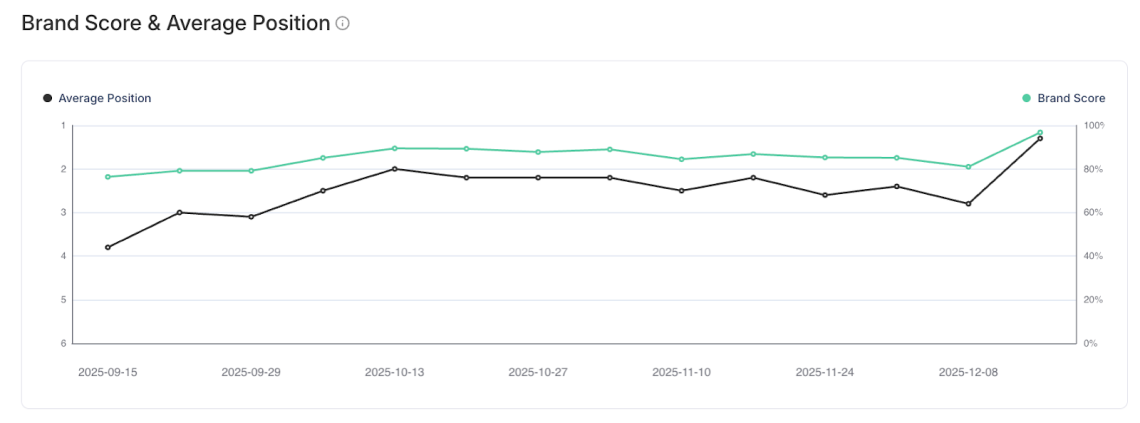
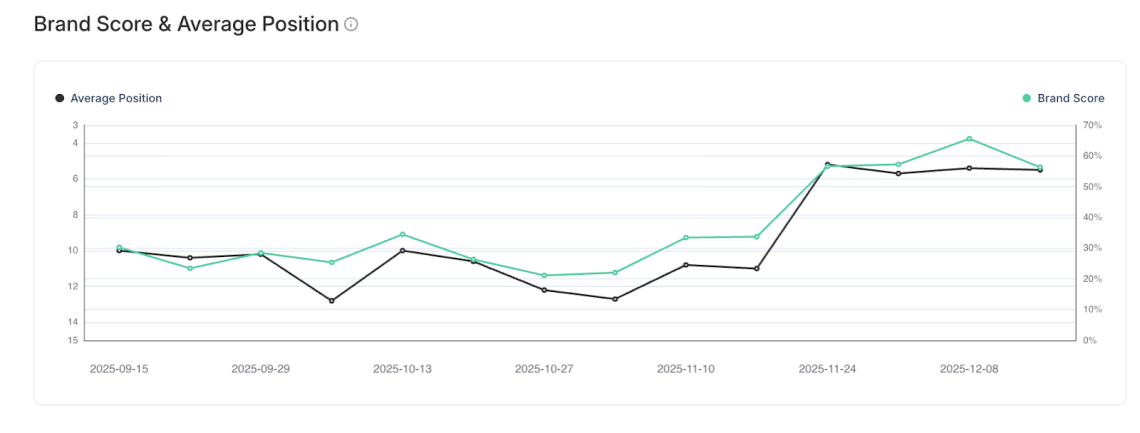
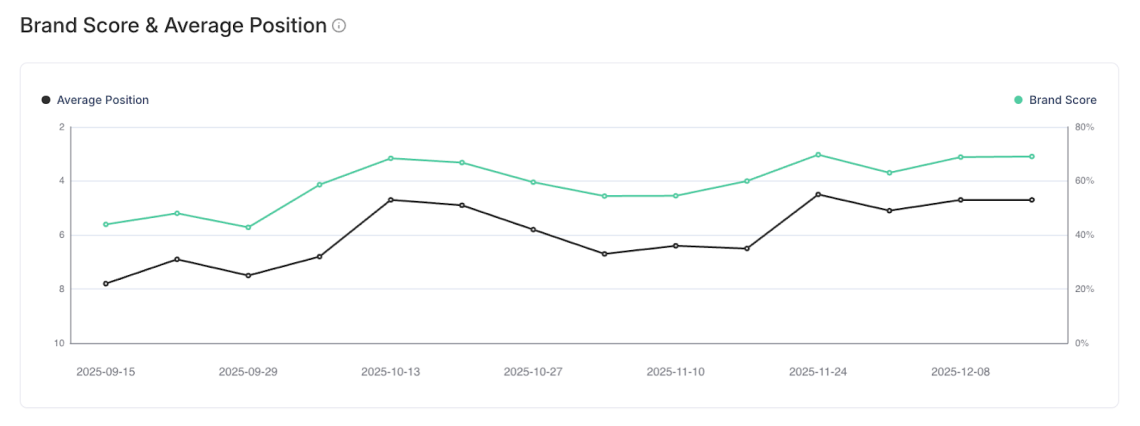
- Perplexity (strongest swings across projects):
- Median position: 3.8 → 1.3 (screenshot 1)
- Median position: 10 → 5.5 (screenshot 2)
- Brand Score: 43% → 69%, with median position 7.8 → 3.5 (screenshot 3)
- Median position: 17 → 6 (screenshot 4)
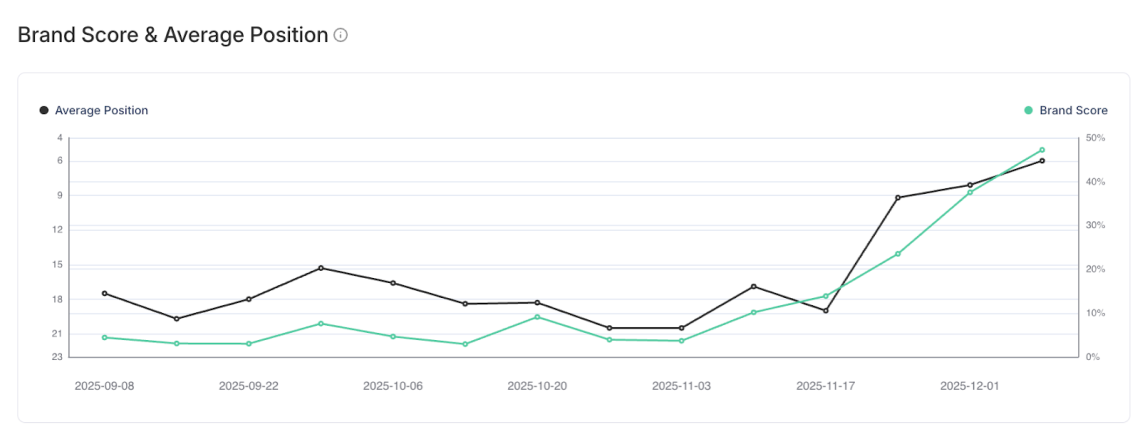
- GPT: one project recorded a Brand Score increase from 7.65% → 57%, meaning the brand moved from “rarely cited” to “regularly recommended” in this model.
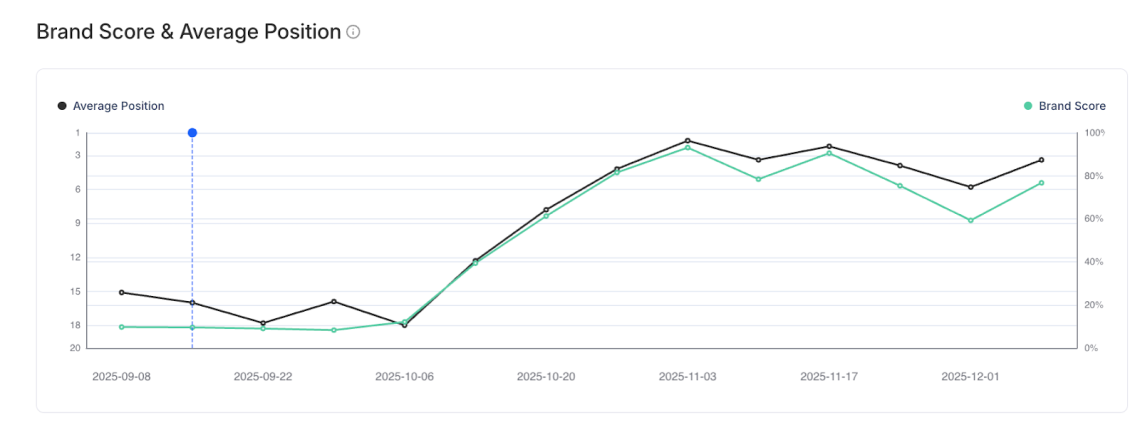
- Gemini: median position improved from 5 → 3.2, confirming uplift beyond a single platform.
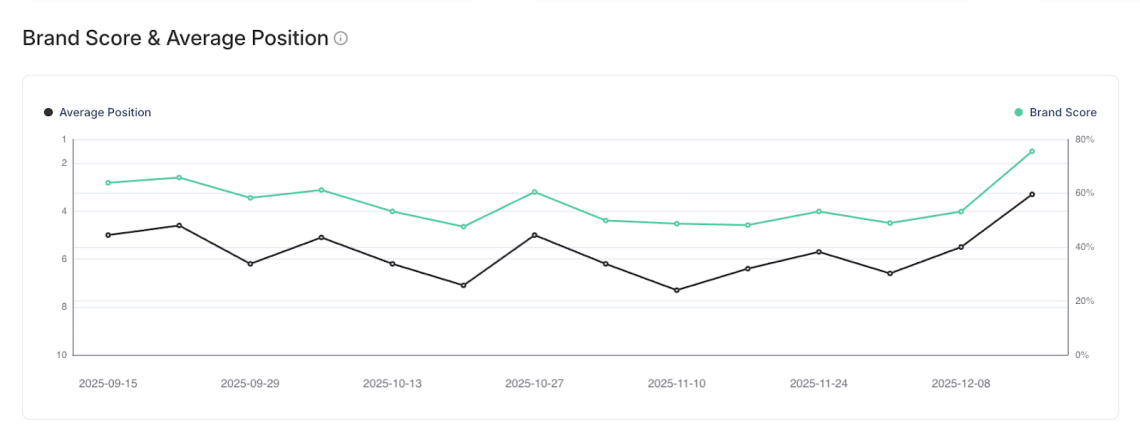
5. Across categories: most trending up, none trending down
Across five AI visibility projects monitored in Chatbeat:
- 3 projects show clear, systematic improvement in both average AI position and Brand Score,
- 2 projects remain stable, with no loss in visibility.
"Overall, AI positioning work is paying off in most monitored areas, lifting both visibility and answer quality for our key topics."
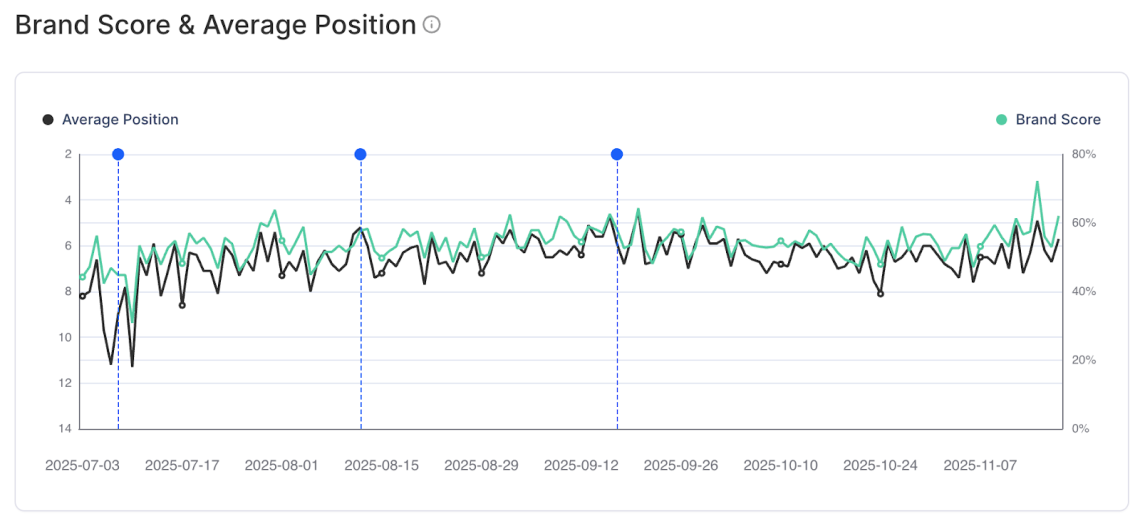
Takeaway for other brands
Viessmann’s experience shows that:
- If you are strong offline but invisible in AI, you are already losing part of the funnel.
- Combining SEO with AI visibility tools like Chatbeat lets you:
- see what people ask,
- see what AI answers,
- and measure how often your brand appears and is recommended.
The result is not just more traffic, but more situations where AI says your brand’s name first.